Should you buy a UTV with heat or full HVAC? Compare heater-only and heating-and-AC side-by-sides for ranch work, hunting, snow plowing, trail riding, and year-round use in Oregon and Idaho.
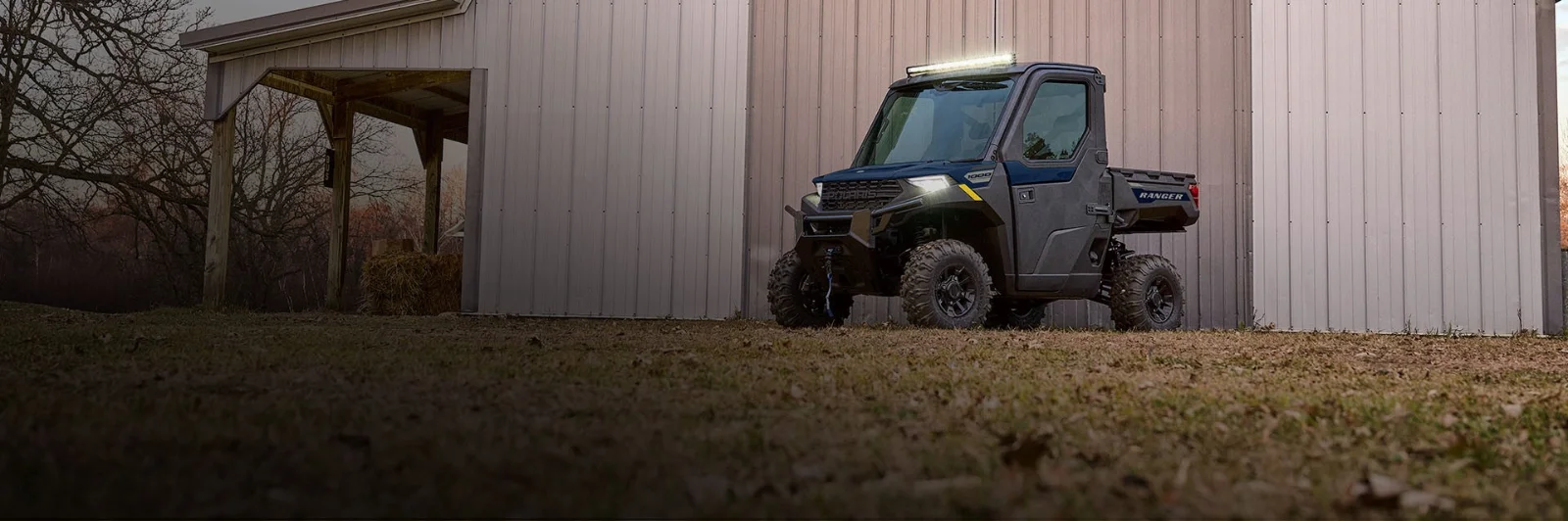
Factory-enclosed UTV cabs have evolved rapidly. It used to be standard practice to buy a side-by-side, install an aftermarket roof and windshield, bolt on temporary soft doors, and struggle to fit a small auxiliary heater core before winter set in. Today, utility side-by-side manufacturers offer factory-sealed cabs complete with glass windshields, automotive-style power windows, integrated defrost ducts, high-output heaters, and even full heating, ventilation, and air conditioning (HVAC) climate control systems. This leaves buyers asking a practical question:
Do you actually need full factory HVAC, or is a heater-only cab setup all you need?
For property owners, ranchers, farmers, and trail riders across Ontario, Eastern Oregon, Boise, and the broader Treasure Valley, the answer comes down to how many months out of the year your UTV works for you. If your machine is parked all summer and only rolls out to plow snow, feed livestock, or haul firewood from November to February, air conditioning is an unnecessary expense. However, if that same UTV checks irrigation in July, hauls fencing gear in August, packs out elk in October, and clears drifted driveways in January, full factory HVAC fundamentally transforms how usable and comfortable that machine is year-round.
Heat vs. Full HVAC: Understanding the Difference
While it sounds straightforward, trim levels can easily cause confusion during the buying process.
- Heated Cab Systems: Includes a fully enclosed cab, an integrated heater core, multi-speed blower fans, and dedicated windshield defrost vents. It provides total protection from winter wind, rain, and snow, keeping the interior warm—but it does not include air conditioning.
- Full HVAC Systems: Includes everything in a heated cab, plus a belt-driven A/C compressor, condenser, and climate control system to pump cold, dehumidified air into the cab during hot weather.
┌─────────────────────────────────────────────────────────────────────────┐
│                      FACTORY CAB CLIMATE OPTIONS                        │
└─────────────────────────────────────────────────────────────────────────┘

        HEATER-ONLY CAB                              FULL HVAC CAB
  [ e.g., Ranger 1000 CAB / Defender HD9 ]     [ e.g., Ranger XP 1000 / Defender HD10 ]
 ┌───────────────────────────────────┐        ┌───────────────────────────────────┐
 │ • Sealed Cab Enclosure            │        │ • Sealed Cab Enclosure            │
 │ • Glass Windshield & Wipers       │        │ • Glass Windshield & Wipers       │
 │ • High-Output Heater Core         │        │ • High-Output Heater Core         │
 │ • Windshield Defrost Vents        │        │ • Windshield Defrost Vents        │
 │ ❌ NO Air Conditioning            │        │ ──► PLUS Belt-Driven A/C Compress │
 └───────────────────────────────────┘        └───────────────────────────────────┘
Manufacturers use varying terms across their lineups:
- Polaris: The Ranger 1000 CAB features an enclosed cab with factory heat, but explicitly excludes air conditioning. Step up to the Ranger XP 1000 NorthStar Edition or Ranger XD 1500 NorthStar, and full factory heating and A/C come standard.
- Can-Am: The Defender DPS CAB HD9 provides heating and ventilation, whereas the Defender DPS CAB HD10 and Limited trims feature a full climate control system with A/C.
- Kawasaki: The RIDGE HVAC and RIDGE ST HVAC come equipped with full automotive-style heating and air conditioning powered by an inline four-cylinder engine platform.
- CFMOTO: The UFORCE U10 Pro Highland series features factory-installed climate-controlled cabs with power windows across three-passenger and six-passenger (XL) configurations.
When evaluating quotes or comparing models, always confirm the exact cab specification rather than assuming “CAB” implies air conditioning.
Direct Comparison: Heated Cab vs. Full HVAC
| Feature | Heater-Only Cab | Full HVAC Cab |
|---|---|---|
| Wind & Weather Protection | Excellent | Excellent |
| Cab Defrost & De-Icing | Yes | Yes |
| Winter Heating Performance | High Output | High Output |
| Air Conditioning (Cooling) | No | Yes |
| Dust Mitigation (Windows Closed) | Moderate (Summer heat forces windows open) | Excellent (Windows stay closed on dusty roads) |
| Best For Winter Work | Excellent | Excellent |
| Best For Summer Work | Fair to Good | Excellent |
| Overall Year-Round Versatility | Good | Maximum |
| Relative Initial Purchase Price | Lower | Higher |
When a Heated Cab Makes the Most Sense
A heater-only cab setup can be a smart, cost-effective choice. If your UTV is primarily deployed during freezing weather, you receive the essential comfort features without paying for an A/C compressor you won’t use. A heated cab is ideal for machines primarily used for:
- Snow Plowing & Removal: Keeping driveways, shop lots, and ranch lanes clear.
- Winter Livestock Management: Breaking ice stock tanks, hauling hay bales, and checking herds.
- Late-Season Hunting: Navigating mountain trails in sub-freezing temperatures.
- Shop & Property Chores: Moving tools, wood, and equipment between outbuildings in deep winter.
Top Heater-Only Factory Models
- Polaris Ranger 600 NorthStar: A compact 58-inch-wide chassis featuring a factory-enclosed heated cab, 44 horsepower, and a 500 lb bed capacity—ideal for tight property gates and snow plowing.
- Polaris Ranger 1000 CAB: Provides a full-size 61 hp work platform with a 1,000 lb box capacity, 2,500 lb tow rating, glass windshield, crank windows, and factory heat without the added price of an A/C system.
- Can-Am Defender DPS CAB HD9: Delivers a sealed cab environment with power windows, a glass windshield, wiper system, and high-output heating and ventilation.
Where Full HVAC Pays Off
In Eastern Oregon and Southwest Idaho, summer temperatures regularly climb into the 90s and 100s. A sealed glass cab with full doors that feels warm and cozy in January can act like a greenhouse in July. While you can roll down power windows or unbolt doors for summer riding, doing so removes the benefits of buying a sealed factory cab in the first place—exposing the operator to heat, wind noise, trail debris, and dust.
                             [ Summer Trail & Ranch Travel ]
                                           │
                    ┌──────────────────────┴──────────────────────┐
                    ▼                                             ▼
       [ Windows Open for Airflow ]                   [ Windows Closed with A/C ]
       • Excessive Dust Infiltration                  • Clean, Dust-Free Air
       • Wind & Engine Noise                          • Quiet Cab Environment
       • High Ambient Heat Exposure                   • Set Interior Temperature
Full HVAC allows the cab to stay completely sealed year-round, delivering three key advantages:
1. Dust Suppression
Ranching and trail riding in the Treasure Valley during late summer means encountering thick alkali dust. Opening windows or tilting windshields creates a low-pressure suction effect that pulls dust directly into the cab. A sealed cab running A/C keeps fresh, filtered air circulating while keeping dust out.
2. Defrost & Dehumidification
Air conditioning is just as useful in November as it is in July. A/C units pull moisture out of the air. When your boots are covered in wet snow and your damp coat is radiating humidity, turning on the defrost with the A/C compressor engaged clears fogged glass instantly.
3. Reduced Operator Fatigue
Commercial operators, ranchers, and municipal crews spending 6 to 10 hours a day inside a UTV experience far less physical fatigue when working in a temperature-controlled, quiet, dust-free cabin.
Current Full-HVAC UTV Models
If year-round climate control fits your workflow, manufacturers offer several distinct platforms:
- Polaris Ranger XP 1000 NorthStar Edition: Features an 82 hp engine, 2,500 lb towing capacity, 1,000 lb box capacity, Ride Command integration, and a fully sealed HVAC cab.
- Polaris Ranger XD 1500 NorthStar: Built for heavy commercial and agricultural demands, combining an inline three-cylinder 110 hp engine, STEELDRIVE automatic transmission, 1,500 lb box capacity, 3,500 lb towing capacity, and heavy-duty HVAC.
- Can-Am Defender DPS CAB HD10 & Limited: Powered by the 82 hp Rotax HD10 V-Twin, pairing power windows, a tilt-glass windshield, and automated climate control with a 2,500 lb tow rating.
- Kawasaki RIDGE HVAC & RIDGE ST HVAC: Built around a smooth 999cc inline four-cylinder engine (producing 92 hp on ST trims), offering automotive-grade interior styling, power windows, and quiet HVAC performance.
- CFMOTO UFORCE U10 Pro Highland / XL Highland: Features a 998cc three-cylinder engine, 8-inch TFT display, power windows, and factory HVAC available in both 3-passenger and 6-passenger crew layouts.
Application Guide: Match Your Workload to the Right Cab
Use this reference table to evaluate which setup fits your routine:
| Primary Use Case | Recommended Cab Setup | Key Reason |
|---|---|---|
| Dedicated Snow Plowing | Heater-Only | Maximum defrost and winter warmth; A/C sits idle all winter. |
| Winter Livestock Feeding | Heater-Only | Protects against cold wind during short morning/evening chores. |
| Late-Season Big Game Hunting | Heater-Only or HVAC | Heat handles freezing glass and morning frost; HVAC helps during warm early seasons. |
| Year-Round Ranch & Farm Work | Full HVAC | Manages freezing winter chores and keeps dust out during hot summer irrigation checks. |
| Commercial / Property Management | Full HVAC | Keeps operators productive across 200+ annual engine hours in all weather extremes. |
| High Annual Usage (200+ Hours) | Full HVAC | Multi-season comfort yields high return on investment. |
| Low Annual Usage (<50 Hours) | Heater-Only | Lower purchase price aligns with limited winter-only hours. |
Factory Cab vs. Aftermarket Cab Upgrades
If you currently own an open-cab side-by-side, adding an aftermarket glass windshield, wiper kit, hard rear panel, poly doors, and an auxiliary heater core is possible. However, if you are purchasing a new machine and know you want a fully enclosed climate-controlled cab, factory-integrated cabs are almost always the better financial and functional choice:
- Precision Sealing: Factory cab frames are engineered with custom automotive door gaskets, sealed floor pass-throughs, and tight dash integration that aftermarket kits struggle to match.
- Electrical & Engine Integration: Factory HVAC systems utilize heavy-duty alternators, pre-routed coolant lines, and factory dash vents designed into the electrical loom.
- Resale Value & Package Price: Pricing out a base UTV plus an aftermarket roof, glass windshield, wiper/washer kit, hard doors, rear panel, heater kit, and labor often brings the total cost surprisingly close to a factory-built heat or HVAC model—while factory models retain significantly higher resale value.
Tax & Purchase Considerations for Oregon & Idaho Buyers
When purchasing a utility side-by-side near state lines—such as at our dealership in Ontario, Oregon:
- Oregon Residents: Pay 0% state sales tax on vehicle purchases, factory accessories, parts, and service labor.
- Out-of-State / Idaho Residents & Financed Purchases: Applicable state sales tax must be collected on the UTV purchase price if you reside in Idaho (or another taxed state) or choose to finance the machine.
- Tax-Free Accessories & Service: Parts, plow attachments, cab accessories, enclosures, riding gear, and shop labor performed in Oregon remain 100% tax-free, regardless of your home state or financing status.
Consult our sales team to ensure all registration, financing paperwork, and tax exemptions are properly structured before taking delivery.
Frequently Asked Questions
Can I add air conditioning to a heater-only factory cab later?
Adding aftermarket A/C to a factory heat-only cab is technically possible on select models, but it requires mounting an A/C compressor, condenser, custom belt routing, and new dash ducting. It is far more cost-effective to buy a factory HVAC model from the start if you anticipate needing summer cooling.
Does running the A/C or heater reduce UTV engine horsepower?
Heater cores draw heat directly from engine coolant and use minimal electrical power for the fan. Air conditioning compressors are belt-driven off the engine, taking a small amount of horsepower (typically 2 to 5 hp). Modern 80+ hp utility engines handle this load effortlessly without any noticeable loss in working capacity.
How do I prevent dust from getting into my UTV cab during summer?
Keep all windows and windshields fully closed and run the A/C or ventilation fan on medium speed. This creates positive cab pressure, pushing air out of small body seams rather than sucking dust into the cabin.
Explore Factory Cab UTVs at Edge Performance Sports
Whether you need a dedicated winter plow machine like the Ranger 1000 CAB or a full year-round workhorse like the Defender HD10 Limited or RIDGE HVAC, comparing cab designs in person makes all the difference. At Edge Performance Sports in Ontario, Oregon, our showroom features enclosed utility side-by-sides from Polaris, Can-Am, Kawasaki, and CFMOTO. Our team will help you inspect cab sealing, test climate controls, and select the right cab setup for your property and budget. Visit our Ontario location today or contact us online to browse current cabbed UTV inventory!