Compare top boosted sport UTVs: Polaris RZR Pro R Boost, Maverick R, Teryx H2, Pro S, X3 Turbo RR & ZFORCE Z10. Find HP, suspension & specs at Edge Sports.
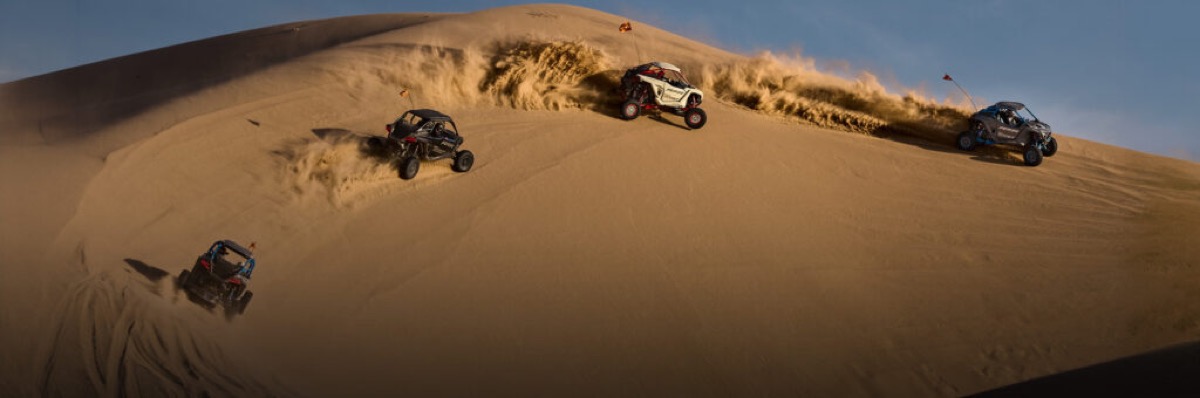
The sport side-by-side market has evolved into a battle of extreme performance. Horsepower figures continue to reach new peaks, suspension travel is matching full-scale off-road race trucks, and tire sizes are pushing well past 30 inches straight from the showroom floor. High-end UTVs are no longer just recreational play machines—they are purpose-built off-road vehicles designed to dominate dunes, high-speed desert washes, technical rock crawls, and wide-open trails.
However, not every boosted sport side-by-side targets the same buyer. Some prioritize peak horsepower, others focus on drivetrain engagement or multi-passenger capacity, while some build their reputation on value and accessibility.
In this comprehensive guide, we compare six premier boosted sport UTVs:
- Polaris RZR Pro R Boost
- Kawasaki Ridge Limited / Teryx H2 Platform (Supercharged Forced Induction)
- Can-Am Maverick R
- Polaris RZR Pro S
- Can-Am Maverick X3 Turbo RR
- CFMOTO ZFORCE Z10
Whether you ride the Owyhee desert near Ontario, the St. Anthony Sand Dunes, or high-altitude Idaho mountain trails, this guide evaluates forced induction types, specs, suspension systems, and real-world performance to help you select the right machine.
What Makes These UTVs “Boosted”?
The term boosted encompasses any engine utilizing forced induction to pack more air into the combustion chambers, generating higher horsepower and torque than naturally aspirated engines. In this comparison, two distinct methods of forced induction are represented:
- Turbocharged Systems: Used by Polaris, Can-Am, and CFMOTO. A turbocharger uses expanding engine exhaust gas to spin a turbine, which forces compressed air into the intake manifold. Turbochargers excel at high RPMs and deliver massive top-end power, though boost delivery can exhibit subtle lag depending on exhaust pressure building up.
- Supercharged Systems: Featured on Kawasaki’s forced-induction models (like the Teryx H2 concept and Ridge platforms). A supercharger is mechanically driven directly by the engine’s crankshaft via a belt or gear drive. Because it does not rely on exhaust pressure, boost pressure builds instantly with throttle input, providing immediate low-end torque and linear power delivery across the entire rev range.
Boosted Sport UTV Specifications
| Model | Boost Type & Engine | Output | Transmission & Width | Seating |
|---|---|---|---|---|
| Polaris RZR Pro R Boost | Turbocharged 2.0L 4-Cyl ProStar Fury |
275 HP 215 lb-ft |
Heavy-Duty CVT 74″ Stance |
2-Seat & 4-Seat |
| Kawasaki Teryx H2 / Supercharged Platform | Supercharged 999cc Inline-4 |
250 HP 146.3 lb-ft |
CVT / Centrifugal Clutch 72″ Stance |
2, 4, & 5-Seat Models |
| Can-Am Maverick R | Turbocharged 999cc Rotax Triple |
240 HP N/A |
7-Speed Dual-Clutch (DCT) 77″ Stance |
2-Seat & 4-Seat MAX |
| Can-Am Maverick X3 Turbo RR | Turbocharged 900cc Rotax ACE Triple |
200 HP N/A |
QRS-X CVT 64″ or 72″ Stance |
2-Seat & 4-Seat MAX |
| Polaris RZR Pro S | Turbocharged 925cc ProStar Twin |
181 HP N/A |
High-Performance CVT 74″ Stance |
2-Seat & 4-Seat |
| CFMOTO ZFORCE Z10 | Turbocharged 998cc Triple |
154 HP 107 lb-ft |
CVT 64″ Stance |
2-Seat & 4-Seat |
Detailed Model Analysis
Polaris RZR Pro R Boost
The RZR Pro R Boost sits at the top of the factory power hierarchy. Powered by a boosted 2.0L four-cylinder engine generating 275 horsepower and 215 lb-ft of torque, it offers automotive-grade strength designed for high-speed desert washes and sand dunes.
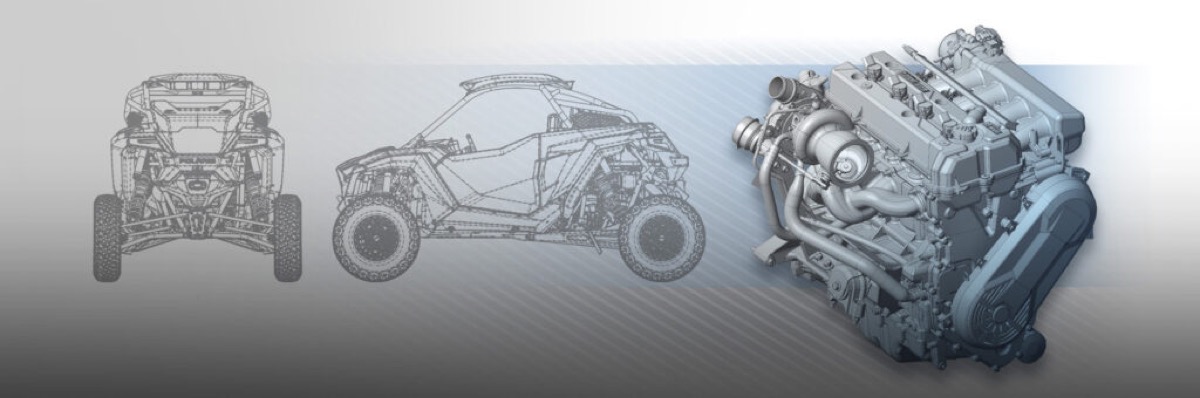
- Suspension & Chassis: Features a massive 74-inch stance with up to 29 inches of usable suspension travel. Top-tier Ultimate models incorporate DYNAMIX DV active suspension, which adjusts shock dampening in real-time based on terrain feedback.
- Tire Setup: Factory equipped with 32-inch tires on 15-inch aluminum wheels, providing high ground clearance for deep trail ruts and rocks.
- Ideal Rider: Drivers who demand the highest factory horsepower available and spend most of their time in open, high-speed desert environment or deep dune sand.
Kawasaki Teryx H2 / Supercharged Platform
Borrowing technology from Kawasaki’s legendary Ninja H2 motorcycle program, Kawasaki brings supercharged forced induction to the side-by-side market. Delivering 250 horsepower from a 999cc inline-four engine, power delivery is instantaneous with zero boost lag.
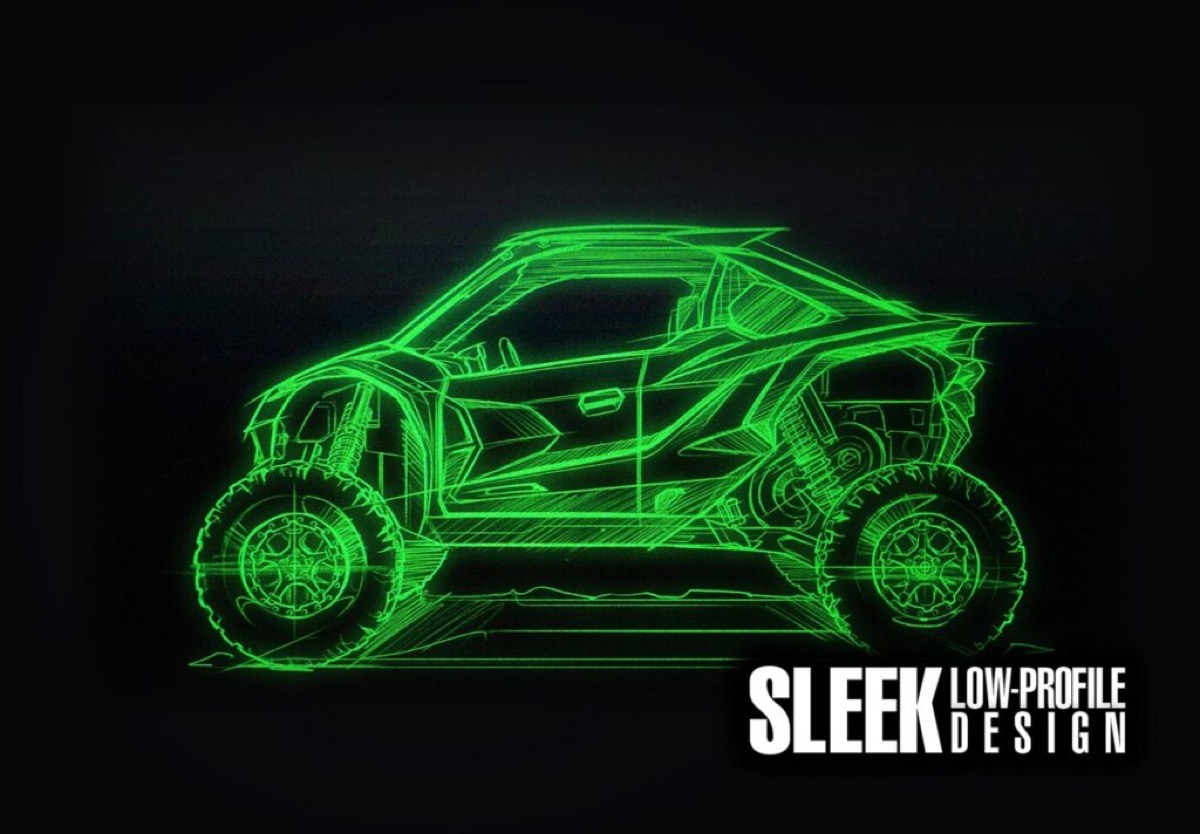
- Suspension & Chassis: Fitted with 33-inch Maxxis Carnivore Plus tires and FOX 3.0 Internal Bypass shocks, providing incredible bump absorption across washboard desert roads.
- Seating Versatility: Stand out in the high-horsepower segment by offering 2-seat, 4-seat, and genuine 5-seat family layouts.
- Ideal Rider: Enthusiasts seeking immediate low-end throttle response without turbo lag, alongside families who need a 5-passenger configuration.
Can-Am Maverick R
The Can-Am Maverick R reshaped drivetrain expectations by eliminating the traditional CVT belt in favor of a 7-speed Dual Clutch Transmission (DCT). Paired with a 240-horsepower turbocharged triple-cylinder Rotax engine, driver control is precise with paddle-shift manual gear selection or lightning-fast automatic shifts.
- Suspension Architecture: Utilizes heavy-duty tall-knuckle front suspension and a 77-inch stance, offering up to 26 inches of rear travel. Rock-focused X rc trims come equipped with 35-inch tires directly from the factory.
- Drivetrain Control: Advanced drive modes (Normal, Sport, Sport+) change engine calibration and shift mapping for different trail conditions.
- Ideal Rider: Performance enthusiasts seeking a direct, gear-driven off-road experience without belt heat management concerns.
Polaris RZR Pro S
Positioned as a balanced, high-capability turbo machine, the RZR Pro S fills the role previously occupied by wide-stance models like the Turbo R and Turbo S. Utilizing a 181-horsepower 925cc ProStar engine, it combines agility with a wide 74-inch footprint.
- Suspension: Features long-travel suspension setups paired with Walker Evans Velocity shocks or DYNAMIX active suspension systems on upper trims.
- Handling: Its slightly shorter wheelbase compared to the Pro R offers a nimble, responsive feel on twisting trails while maintaining stability at high speeds.
- Ideal Rider: Trail and desert riders who want wide-stance stability and long-travel suspension without stepping up to a 2.0L four-cylinder chassis.
Can-Am Maverick X3 Turbo RR
The Maverick X3 Turbo RR remains one of the most proven platforms in off-road racing history. Pushing 200 horsepower from its 900cc Rotax ACE engine, the X3 features a low seating position that lowers the vehicle’s center of gravity.
- Platform Maturity: Massive aftermarket ecosystem, proven belt-driven CVT technology, and multiple package widths (64-inch for tight trails, 72-inch for desert/dunes).
- Ergonomics: Low-slung race seating positions driver and passenger low in the chassis for enhanced feel during high-speed cornering.
- Ideal Rider: Drivers who want a proven, highly customizable platform with established trail reliability and tuning support.
CFMOTO ZFORCE Z10
The CFMOTO ZFORCE Z10 introduces turbocharged power to the value-focused sport segment. With a 154-horsepower 998cc triple-cylinder engine, it delivers responsive performance alongside an extensive list of standard factory technology.
- Standard Features: Comes equipped with FOX QSE semi-active electronic suspension, a large digital touchscreen dashboard, integrated winches, and beadlock-capable wheels.
- Value Position: Offers forced-induction performance and high-tier tech options at a significantly lower entry cost than traditional big-three flagships.
- Ideal Rider: Value-conscious buyers wanting modern interior technology and factory turbo fun without high flagship price tags.
Suspension and Drivetrain Comparison
Drivetrain Experience
- CVT (Polaris, Kawasaki, CFMOTO, Can-Am X3): Maintains continuous engine RPM in the heart of the powerband. Belt maintenance and cooling management are key considerations during heavy sand dune use.
- DCT (Can-Am Maverick R): Eliminates drive belts completely. Offers positive gear engagement, rapid manual paddle-shifting, and instant power delivery to the wheels.
Suspension Architecture
- High-Speed Desert & Dunes: Wide-track stances (74″ to 77″) found on the Pro R Boost, Maverick R, and RZR Pro S prevent body roll and smooth out high-speed desert whoops.
- Rock Crawling & Technical Trails: High-clearance A-arms and larger tire footprints (such as the 35-inch tires on the Maverick R X rc) provide superior axle clearance and mechanical traction.
Choosing the Right Boosted UTV for Your Riding Style
- Maximum Horsepower & Sand Dunes: Choose the Polaris RZR Pro R Boost (275 HP) or Can-Am Maverick R (240 HP).
- Immediate Low-End Torque & Group Seating: Choose the supercharged Kawasaki Teryx H2 / Ridge platform (250 HP, available 5-seat capacity).
- Gear-Driven Performance & Rock Crawling: Choose the Can-Am Maverick R with its 7-speed DCT transmission and optional 35-inch factory tires.
- Balanced Trail & Wide-Stance Stability: Choose the Polaris RZR Pro S (181 HP) or Can-Am Maverick X3 Turbo RR (200 HP).
- Best Value with Factory Tech: Choose the CFMOTO ZFORCE Z10 (154 HP).
Compare Boosted Sport UTVs at Edge Performance Sports
Seeing these high-performance side-by-sides in person is the best way to evaluate seating ergonomics, sightlines, cockpit controls, and build quality.
Visit Edge Performance Sports in Mountain Home, Idaho—conveniently located for riders across Ontario, Oregon, Boise, Nampa, Caldwell, and the Treasure Valley. Our team can help you compare new and pre-owned sport UTVs, review financing options, and equip your machine with custom accessories built for Idaho terrain.