
- Sales:541-903-5438
- |
- Service:541-204-2095
- |
- Parts:541-204-2114
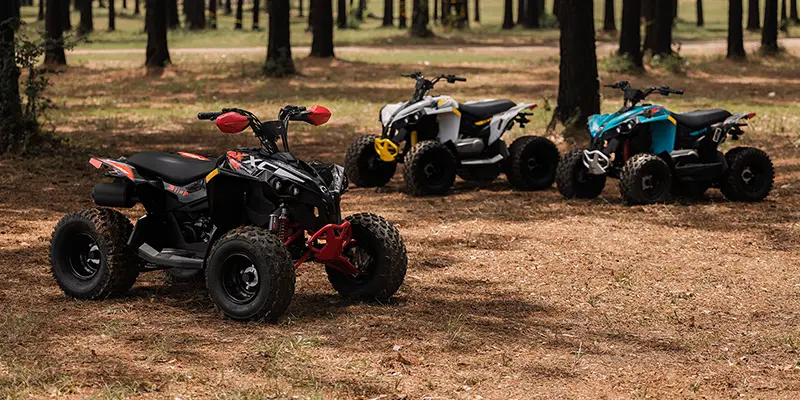
The landscape of youth powersports has undergone a sophisticated evolution over the last decade. No longer relegated to simple, lawnmower-engine toys, the modern 110cc segment—comprising All-Terrain Vehicles (ATVs) and off-road motorcycles—represents a significant leap in engineering, safety technology, and performance capability. For families residing in the unique geographical corridor of the Treasure Valley, encompassing Ontario, Oregon, and Boise, Idaho, the introduction to off-road riding is more than a hobby; it is a cultural cornerstone embedded in the rugged topography of the region.
This report serves as an exhaustive analysis of the 110cc class, customized specifically for the customers of Edge Performance Sports. It integrates the foundational advice of a beginner’s adventure guide with high-level technical analysis of the market’s three dominant machines: the Can-Am Renegade 110 EFI, the Polaris Outlaw 110 EFI, and the Kawasaki KLX110R series. By synthesizing mechanical specifications, local terrain requirements, and legal frameworks, this document provides a definitive roadmap for parents and enthusiasts entering the sport.
The 110cc engine displacement category is widely regarded as the “Goldilocks” zone of youth powersports. It bridges the critical developmental gap between the entry-level 50cc/90cc machines—often outgrown by age 8 or 9—and the physically demanding 250cc sport class.
Technically, machines in this class typically utilize 112cc 4-stroke engines. The shift from traditional 2-stroke engines to 4-stroke architecture in youth models has been driven by a need for linear torque delivery. Unlike the “peaky” powerband of a 2-stroke, which can startle a novice rider, a 4-stroke 112cc engine provides smooth, tractable power that builds predictably as RPMs increase. This characteristic is essential for teaching the fundamentals of traction management on the loose shale and sand found in the Owyhee Front.
Located in Ontario, Oregon, Edge Performance Sports operates at the intersection of two distinct riding environments: the high desert trails of Eastern Oregon and the mountainous single-track of Western Idaho. This geographical reality necessitates a higher standard of vehicle performance.
For the Edge Performance Sports customer, a youth vehicle cannot simply be a “yard toy.” It must possess the cooling capacity to handle high-desert heat in July and the fuel delivery precision to operate at varying altitudes—from the Snake River plain to the Sawtooth foothills. This requirement highlights the critical importance of the industry’s migration toward Electronic Fuel Injection (EFI) in youth ATVs, a feature now standard on both Can-Am and Polaris 110cc models carried by the dealership. EFI ensures that cold-morning starts during late-season elk hunts or winter trail rides are effortless, eliminating the frustration of carburetor choke management that plagued previous generations of parents.
The ATV market for youth riders is dominated by a focus on stability, ease of operation, and safety integration. The two primary competitors available at Edge Performance Sports—the Can-Am Renegade and the Polaris Outlaw—represent the pinnacle of this engineering philosophy.

The Can-Am Renegade 110 EFI is engineered for the rider who aspires to the aggressive, sporty aesthetic of Can-Am’s adult Renegade line. It is not merely a utility vehicle shrunk down; it is a sport quad chassis adapted for youth dimensions.
At the core of the Renegade 110 is a 112cc 4-stroke single-cylinder engine. This air-cooled powerplant is mated to a Continuously Variable Transmission (CVT). The CVT is a critical component for the target demographic (ages 10+), as it removes the cognitive load of manual shifting. The system automatically adjusts the gear ratio based on engine RPM and load, keeping the engine in its optimal power band whether the rider is climbing a dune at St. Anthony or navigating a flat trail.
Crucially, the transmission includes Forward, Neutral, and Reverse (F/N/R). The inclusion of reverse is a substantial safety and convenience feature, allowing young riders to extricate themselves from tight situations—such as a nose-in parking spot or a trail dead-end—without requiring an adult to physically pull the machine backward.
Can-Am offers two distinct tiers of suspension geometry within this class, a differentiator that is vital for Edge Performance Sports customers to understand:
The transition to EFI in the Renegade 110 addresses the specific needs of the Pacific Northwest rider.
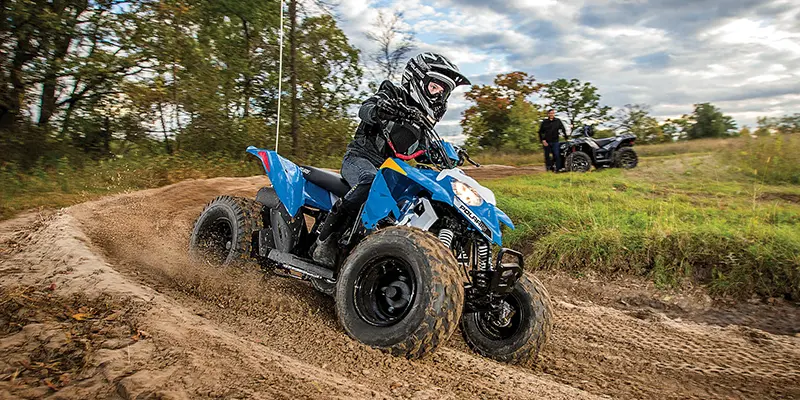
Polaris has positioned the Outlaw 110 EFI as a comprehensive “turn-key” solution for parents, heavily emphasizing safety infrastructure and ease of ownership. Styling mimics the adult Outlaw sport quads, appealing to youth riders who want to look “fast” while riding a machine engineered for stability.
The Outlaw 110 is marketed under the “Grow with Polaris” banner, which implies a vehicle lifespan that extends across several years of a child’s development. This is achieved primarily through the adjustable speed limiter.
Polaris distinguishes itself by including a complete safety package with every vehicle purchase, a significant value-add for Edge Performance Sports customers:
The Outlaw 110 features a Single A-Arm front suspension with 5 inches of travel and a Mono-Shock Swingarm rear with 6 inches of travel. While slightly less sophisticated than the Can-Am X xc’s double A-arms, the Polaris suspension is tuned for “plushness,” prioritizing comfort over ease of aggressive cornering. The machine’s Long Travel Rear Suspension is specifically highlighted for its ability to absorb trail chatter, reducing rider fatigue during day-long family outings.
| Feature | Can-Am Renegade 110 EFI | Polaris Outlaw 110 EFI |
|---|---|---|
| Engine | 112cc 4-stroke Single Cylinder, Air Cooled | 112cc 4-stroke Single Cylinder, Air Cooled |
| Fuel System | EFI with Throttle Limiter | EFI with Throttle Limiter |
| Transmission | CVT (F / N / R) | Automatic PVT (F / N / R) |
| Front Suspension | Single A-Arm (Base) / Double A-Arm (X xc) | Single A-Arm |
| Front Travel | 5 in. (12.7 cm) / 5.5 in. (14 cm) | 5 in. (12.7 cm) |
| Rear Travel | 6 in. (15.2 cm) | 6 in. (15.2 cm) |
| Tires (F/R) | 19×7-8 / 18×9.5-8 | 19×7-8 / 18×9.5-8 |
| Ground Clearance | 8.3 in. (under frame) / 4.5 in. (rear axle) | 3.5 in. (minimum) |
| Safety Features | Throttle Limiter, Neutral/Reverse Lights | Helmet, Tether, Whip Flag, Limiter, DVD |
| Est. Dry Weight | 295 lb (134 kg) | 278 lb (126 kg) |
| Age Rating | 10+ Years | 10+ Years |
For families who favor the agility and active engagement of motorcycling, the Kawasaki KLX110R series represents the gold standard in the 110cc class. Unlike ATVs, which offer inherent stability, dirt bikes require the rider to master balance, creating a steeper learning curve but arguably developing finer motor skills and trail reading abilities.
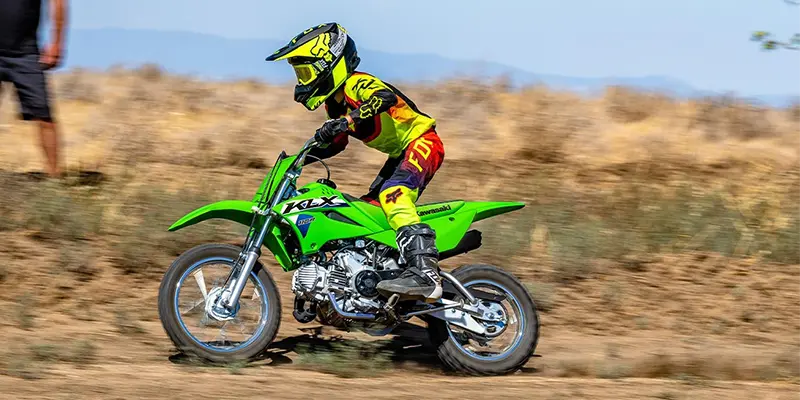
The KLX110 is unique in that it appeals to two distinct demographics: young beginners learning to ride, and adults participating in the thriving “pit bike” culture. This dual-market appeal ensures strong resale value and massive aftermarket support. Edge Performance Sports stocks both variants of this machine, and understanding the difference is critical for the consumer.
Both the KLX110R and KLX110R L utilize a 112cc air-cooled, 4-stroke SOHC engine. However, they diverge significantly in how that power is transmitted to the ground.
The physical stature of the bike is the second major differentiator.
Unlike the Can-Am and Polaris ATVs, the 2025/2026 Kawasaki KLX110 series retains a Keihin PB18 carburetor. While lacking the automatic altitude compensation of EFI, the Keihin carburetor is simple, reliable, and easily tuned by home mechanics. For many enthusiasts, the simplicity of a carburetor is a feature, not a bug, as it allows for easy modification without expensive electronic diagnostic tools. The bike includes a screw-type throttle limiter on the grip housing, allowing parents to physically restrict throttle opening.
| Feature | KLX110R (Standard) | KLX110R L (Large) |
|---|---|---|
| Engine | 112cc 4-stroke, SOHC | 112cc 4-stroke, SOHC |
| Fuel System | Keihin PB18 Carburetor | Keihin PB18 Carburetor |
| Clutch | Automatic Centrifugal | Manual Wet Multi-Disc |
| Transmission | 4-Speed Return Shift | 4-Speed Return Shift |
| Starting | Electric & Kick | Electric & Kick |
| Seat Height | 26.8 in. | 28.7 in. |
| Ground Clearance | 8.5 in. | 10.4 in. |
| Suspension Travel (F) | 4.3 in. | 5.5 in. |
| Suspension Travel (R) | 4.3 in. | 5.2 in. |
| Curb Weight | 167.5 lb | 167.5 lb |
For customers of Edge Performance Sports, the question is not just what to buy, but where to ride. The region surrounding Ontario, OR, and Boise, ID, offers some of the most diverse off-road terrain in the United States.
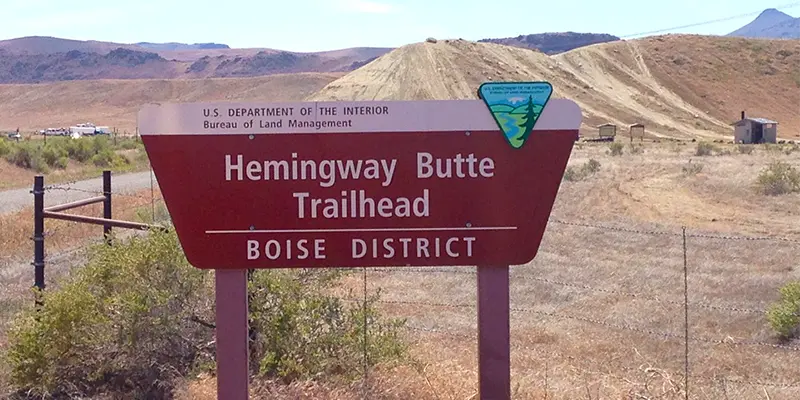
Located approximately 45 miles southwest of Boise near Melba, ID, Hemingway Butte is the premier destination for youth riders.
Connecting to the Hemingway Butte system near Murphy, ID, Rabbit Creek offers hundreds of miles of designated trails.
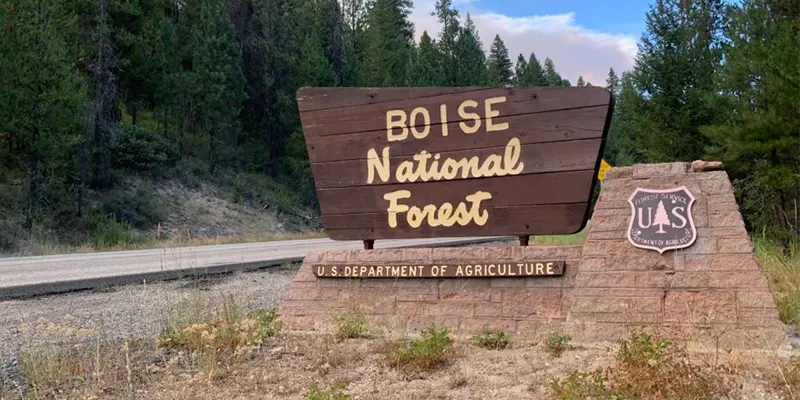
For summer riding, the mountains north of Boise offer cooler temperatures. The Idaho City trail system creates a network of forest service roads and single-track.
Edge Performance Sports sits on the border of two states with distinct regulatory requirements for off-road vehicles. Navigating these laws is essential for legal and safe riding.
A 110cc machine is a precision-engineered vehicle that requires regular maintenance to ensure safety and longevity.
The first 10 to 25 hours of operation are the most critical in the vehicle’s life.
When the snow flies and riding slows down (or switches to snowmobiles), proper storage is key:

While the used market exists, purchasing new from Edge Performance Sports offers distinct advantages:
Edge Performance Sports offers flexible financing solutions to make ownership accessible.
The 110cc class is the gateway to a lifetime of adventure. Whether you choose the race-inspired Can-Am Renegade 110 EFI, the safety-focused Polaris Outlaw 110 EFI, or the agile Kawasaki KLX110R, you are providing your child with more than a vehicle—you are giving them a tool for building confidence, responsibility, and memories.
Edge Performance Sports in Ontario, OR, stands ready to support this journey. With a deep understanding of the local terrain, a commitment to safety education, and a comprehensive lineup of machines and gear, the dealership is the ultimate partner for families in the Treasure Valley.
Visit Edge Performance Sports today to test sit these models and find the perfect fit for your young rider.
The manufacturer age rating for the Can-Am Renegade 110, Polaris Outlaw 110, and Kawasaki KLX110R is typically 10 years of age and older. However, this is a guideline. Parents should assess their child’s physical size, coordination, and maturity. Riders under 16 must always be supervised by an adult.
Unrestricted, a 110cc ATV or dirt bike can reach speeds of approximately 29-30 mph (48 km/h). However, they come from the factory with a speed limiter set to approximately 15 mph (24 km/h). This allows parents to control the top speed and increase it only as the child’s skills develop.
Yes. Both the Polaris Outlaw 110 and Can-Am Renegade 110 are equipped with a transmission featuring Forward, Neutral, and Reverse. This is a significant safety feature, allowing riders to back out of trouble without dismounting.
It depends on the model. The standard KLX110R features an automatic centrifugal clutch, meaning you shift gears with your foot but do not need to use a hand lever. The KLX110R L model features a full manual clutch with a hand lever, designed for learning traditional motorcycle shifting.
No. All three major 110cc models (Can-Am, Polaris, Kawasaki) utilize 4-stroke engines. This means they take straight gasoline (Regular Unleaded, preferably non-ethanol) in the fuel tank, and engine oil is held separately in the crankcase, similar to a car.
EFI provides consistent fuel delivery regardless of temperature or altitude. For riders in the Treasure Valley who might ride in the valley floor one day and the high mountains the next, EFI ensures the engine runs smoothly without needing carburetor adjustments (re-jetting). It also dramatically improves cold-weather starting.
A “break-in” oil change is required after the first 20-25 hours of use to remove manufacturing metal particles. After that, oil should typically be changed every 6 months, 100 hours, or 1,000 miles, whichever comes first.
Youth riders do not need a driver’s license for off-road use on public land, but they must possess an Oregon ATV Safety Education Card. Riders under 16 are required to complete both an online safety course and a hands-on evaluation.
Generally, no. While Idaho has provisions for restricted vehicle plates on county roads, riders under the age of 16 are typically restricted from road use unless supervised by a licensed adult, and specific local ordinances apply. Always check with the local jurisdiction (e.g., Owyhee County Sheriff) before riding on any road.
| Category | Specification |
|---|---|
| Engine | 112cc 4-stroke Single Cylinder, Air Cooled |
| Fuel System | Electronic Fuel Injection (EFI) with Throttle Limiter |
| Transmission | CVT (F / N / R) |
| Suspension (Front) | Single A-Arm (Base) / Double A-Arm (X xc) |
| Suspension (Rear) | Swingarm |
| Tires (Front/Rear) | 19 x 7-8 in. / 18 x 9.5-8 in. |
| Brakes | Dual Drum (Front) / Single Drum (Rear) |
| Ground Clearance | 8.3 in. (21.1 cm) |
| Est. Dry Weight | 295 lb (134 kg) |
| Age Rating | 10 Years + |
| Category | Specification |
|---|---|
| Engine | 112cc 4-Stroke Single Cylinder |
| Fuel System | Electronic Fuel Injection (EFI) |
| Transmission | Automatic PVT (F / N / R) |
| Suspension (Front) | Single A-Arm (5 in. Travel) |
| Suspension (Rear) | Mono-Shock Swingarm (6 in. Travel) |
| Tires (Front/Rear) | 19 x 7-8 Duro / 18 x 9.5-8 Duro |
| Brakes | 4-Wheel Drum |
| Ground Clearance | 3.5 in. (8.9 cm) |
| Est. Dry Weight | 278 lb (126 kg) |
| Safety Inclusions | Helmet, Safety Tether, Whip Flag, DVD |
| Feature | KLX110R (Standard) | KLX110R L (Large) |
|---|---|---|
| Engine | 112cc 4-stroke, SOHC | 112cc 4-stroke, SOHC |
| Fuel System | Keihin PB18 Carburetor | Keihin PB18 Carburetor |
| Clutch | Automatic Centrifugal | Manual Wet Multi-Disc |
| Transmission | 4-Speed | 4-Speed |
| Seat Height | 26.8 in. | 28.7 in. |
| Ground Clearance | 8.5 in. | 10.4 in. |
| Suspension Travel (F) | 4.3 in. | 5.5 in. |
| Suspension Travel (R) | 4.3 in. | 5.2 in. |
| Starting | Electric (w/ Kick Backup) | Electric (w/ Kick Backup) |
(Note: Specifications based on 2025/2026 model year data provided in research snippets.)
©2026. Edge Performance Sports. All Rights Reserved.

While great effort is made to ensure the accuracy of the information on this site, errors can occur. Please verify all pricing and installed equipment information with a customer service representative. This is easily done by calling us or visiting us at the dealership.
We improve our products and advertising by using Microsoft Clarity to see how you use our website. By using our site, you agree that we and Microsoft can collect and use this data. Our privacy statement has more details.
Save your favorite vehicles for later viewing on your desktop or mobile devices.
Keep track of all the vehicles you've viewed for a better car shopping experience.
Narrow your search by comparing your favorite vehicles.