
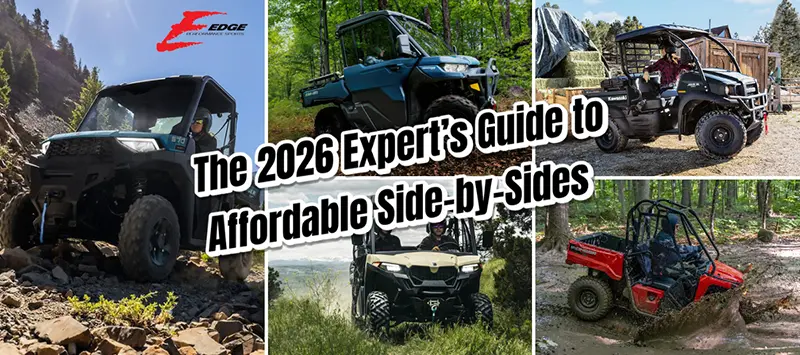
In the diverse landscape of the Treasure Valley—from the high desert scrub of the Owyhees to the dense timber of the Boise National Forest—the Side-by-Side (SXS) has become the ultimate tool for both work and play. But for many, the barrier to entry feels increasingly high. With top-tier sport models pushing past the $30,000 mark, a common question we hear at our Ontario showroom is: “What is the best machine I can get for my money?”
The good news is that the 2026 market continues to offer incredible options in the entry-level segment. Manufacturers like Polaris, Can-Am, Honda, Kawasaki, and CFMOTO are engaging in a fierce battle for the budget-conscious buyer. The result? Machines that are more capable, reliable, and comfortable than ever before.
This guide cuts through the noise. We analyze power, suspension, reliability, and that all-important “bang for your buck” factor to recommend the right vehicle for your specific needs in Idaho and Oregon.
Defining “Affordable” in the 2026 Market
When we discuss “affordable” or “budget-friendly” UTVs in 2026, we are generally looking at the $10,000 to $14,000 MSRP range. At this price point, you are typically looking at the “Mid-Size” utility class. These vehicles are characterized by 400cc–700cc engines, narrower chassis (50–60 inches), and dump beds perfect for property maintenance or hunting.
Quick Comparison: The Top 5 Contenders
| Model | Est. Base MSRP* | Engine | Horsepower | Towing | Best For |
|---|---|---|---|---|---|
| Kawasaki Mule SX 4×4 | ~$9,999 | 401cc Air-Cooled | ~13 HP | 1,100 lb | Best Sub-$10k Value |
| Honda Pioneer 520 | ~$10,499 | 518cc Single | ~29 HP | 1,000 lb | Best for 50″ Trails |
| CFMOTO UForce 600 | ~$10,999 | 580cc Liquid-Cooled | 36 HP | 2,000 lb | Best Features per Dollar |
| Polaris Ranger SP 570 | ~$11,999 | 567cc ProStar | 44 HP | 1,500 lb | Best Ride Quality |
| Can-Am Defender HD7 | ~$13,500 | 650cc Rotax | 52 HP | 2,500 lb | Best Heavy Hauler |
*MSRP is subject to change. Contact Edge Performance Sports for current out-the-door pricing.
1. CFMOTO UForce 600: The Value Disruptor
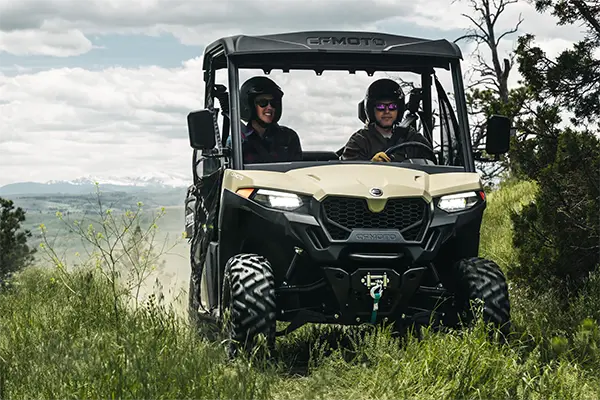
Our Verdict: We recommend the UForce 600 for the buyer who wants a “turn-key” solution without spending thousands on aftermarket add-ons.
Why It Wins on Value
The 2026 CFMOTO UForce 600 continues to make waves by including accessories as standard equipment. While competitors often charge extra for essentials, the UForce 600 rolls off the floor with a 3,500-lb winch, a roof, and aluminum alloy wheels included in the base price.
- Power: The 580cc single-cylinder engine produces 36 horsepower, plenty for trail riding at Hemingway Butte or chores in Nampa.
- Utility: It features a tilting cargo bed with a 600-lb capacity and a 2,000-lb towing capacity, making it a legitimate workhorse for hobby farms.
Local Use Case: For residents in Canyon County or Vale, the standard Electronic Power Steering (EPS) is a game-changer for navigating tight fence lines or backing up trailers.
2. Polaris Ranger SP 570: The Trail Standard
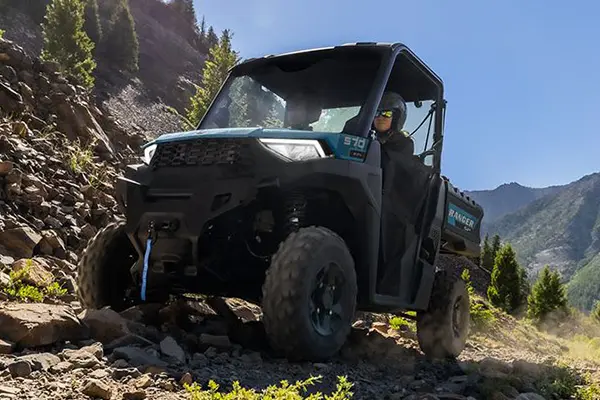
Our Verdict: We recommend the Ranger SP 570 for the rider who prioritizes suspension comfort and plans to upgrade their rig over time.
The Smoothest Ride in Class
The Polaris Ranger SP 570 utilizes a MacPherson Strut front suspension with 9 inches of travel and a Dual A-Arm rear with 10 inches of travel. On the rocky washboards of Rabbit Creek, this suspension setup absorbs chatter better than almost anything else in the mid-size category.
- 2026 Update: The entry-level Ranger 500 has returned to the lineup with a starting price under $10,000, but for true trail capability and power, we still recommend stepping up to the SP 570.
- Performance: The ProStar 570 engine delivers 44 horsepower, giving it a distinct speed advantage over the Mule or Pioneer on open flats.
3. Honda Pioneer 520: The 50-Inch Specialist
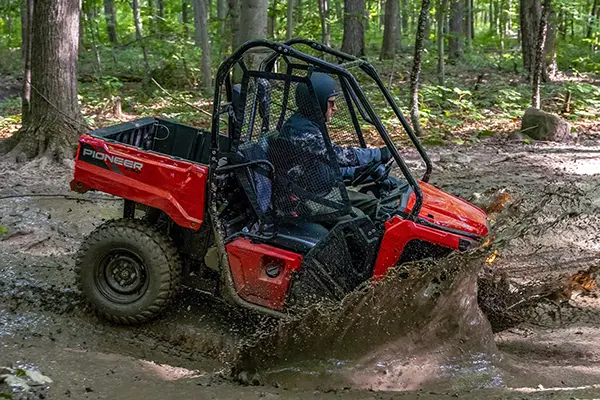
Our Verdict: We recommend the 2026 Pioneer 520 specifically for hunters and explorers who frequent width-restricted National Forest trails.
Major 2026 Update: More Speed
The biggest news for 2026 is that Honda has addressed the primary complaint about the Pioneer 520: top speed. With revised transmission gearing, the 2026 model boasts a 23% increase in top speed compared to previous years. This makes it much more capable on the connector roads between trails.
- Access Where Others Can’t Go: The Pioneer 520 remains 50 inches wide. Many U.S. Forest Service trails in Idaho are restricted to vehicles 50 inches or narrower.
- Comfort Upgrades: Honda has also improved heat management for 2026, significantly reducing cabin heat to keep you and your passenger comfortable during summer rides.
- Geared Transmission: It uses a 5-speed automatic transmission with paddle shifters—no belts to burn and excellent engine braking.
4. Can-Am Defender HD7: The Heavyweight Worker
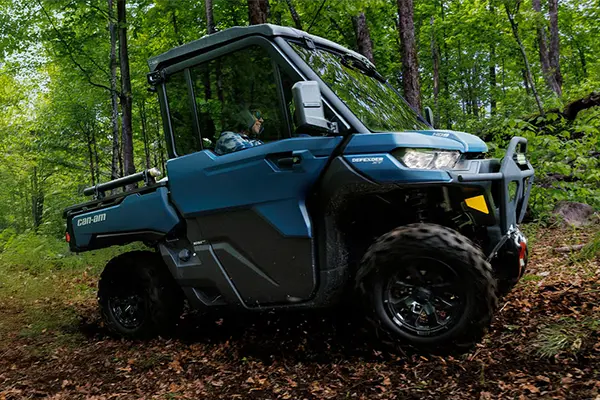
Our Verdict: We recommend the Defender HD7 for ranchers and property owners who need maximum towing capacity.
Built for the Job Site
If your primary use is agricultural work in Ontario or Weiser, the Can-Am Defender HD7 punches above its weight. It boasts a class-leading 2,500-lb towing capacity and a refined cab that offers superior storage.
- Platform Updates: Can-Am has introduced a next-generation platform for 2026 that focuses on reducing noise and vibration.
- Torque: The Rotax 650cc engine produces 52 horsepower and 41 lb-ft of torque, providing the grunt needed to pull heavy sprayers or feed trailers.
5. Kawasaki Mule SX: The “Unkillable” Option
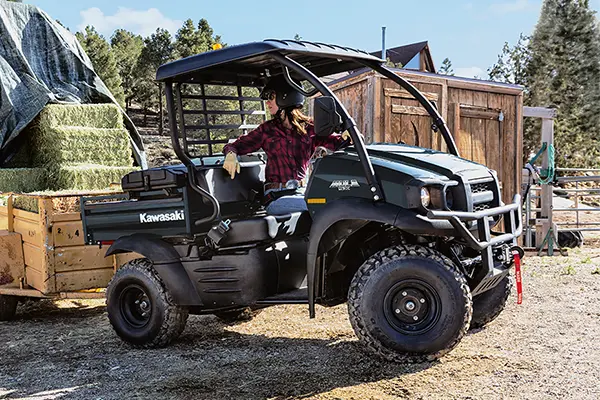
Our Verdict: We recommend the Mule SX for facility managers and users who value longevity over speed.
Simple and Strong
The Kawasaki Mule SX is an industrial tool. Powered by a simple 401cc air-cooled engine, it eliminates the radiator and water pump, removing potential failure points.
- Best Price: With the 2026 Mule SX 4×4 starting right at $9,999, it remains one of the most affordable 4WD options on the market.
- Limitations: It is governed to 25 mph. This makes it unsuitable for recreational trail riding with faster groups, but perfect for safety-conscious job sites.
Geo-Spatial Insight: Matching Your Rig to the Treasure Valley
Living in the Pacific Northwest means our “backyard” includes everything from sand dunes to alpine peaks. Here is how these budget rigs handle our specific local landmarks:
- St. Anthony Sand Dunes: Caution Required. While you can take utility SXSs here, they lack the horsepower for big climbs. You must equip a whip flag and spark arrestor to ride legally. For dunes, we recommend renting a sport model or sticking to the flats.
- Owyhee Front (Hemingway Butte): The Polaris Ranger SP 570 excels here. Its suspension compliance helps smooth out the endless rocks, and the 10-inch rear travel maintains traction on technical climbs.
- Boise National Forest (50″ Trails): The Honda Pioneer 520 is the king of the narrow trails. Its 50-inch width and new higher top speed make it the perfect tool for reaching those remote fire lookouts.
Buying Smart: Financial Advantages at Edge
When you shop at Edge Performance Sports, you aren’t just getting a machine; you’re getting a financial strategy.
- The Oregon Tax Advantage: For our customers living on the Oregon side of the border (Ontario, Nyssa, Vale), purchasing at our Ontario location means 0% Sales Tax. On a $13,000 vehicle, that keeps hundreds of dollars in your pocket.
- Competitive Financing: We work with top lenders to offer rates as low as 0% APR on select models during special events (O.A.C.).
Ready to Ride?
Don’t just read the specs—feel the difference. We stock Polaris, Can-Am, Honda, Kawasaki, and CFMOTO side-by-sides, so you can compare them all in one afternoon.
Frequently Asked Questions (FAQ)
Q: Did the Honda Pioneer 520 get faster for 2026?
A: Yes! For 2026, Honda updated the transmission gearing to deliver a 23% increase in top speed, making it much better suited for connecting trails on fire roads.
Q: Is the Polaris Ranger 500 back for 2026?
A: Yes, Polaris has reintroduced the Ranger 500 as a value leader starting under $10,000. It is a great option for light work, though the Ranger SP 570 remains our top pick for trail riding due to its superior suspension and power.
Q: Which affordable Side-by-Side is best for snow plowing?
A: The Can-Am Defender HD7 and CFMOTO UForce 600 are excellent for plowing due to their heavier chassis weight and torque, which helps maintain traction when pushing heavy snow.
Q: Can I finance a Side-by-Side with bad credit or as a first-time buyer?
A: Yes, it is possible to finance a UTV with challenged credit. Dealerships like Edge Performance Sports work with “second chance” lenders to help first-time buyers or those rebuilding credit. Financing a lower-cost machine, such as a Kawasaki Mule SX or CFMOTO UForce 600, is often recommended as an effective way to establish a positive payment history.
Q: Does my Idaho OHV sticker work in Oregon (and vice versa)?
A: Generally, no. Idaho residents riding in Oregon must purchase a non-resident Oregon ATV Permit. Conversely, Oregon residents riding in Idaho are required to purchase an Idaho Non-Resident OHV Restricted Vehicle License. Riders should always verify the current year’s regulations on the respective state parks websites before hauling their vehicles across state lines.
Q: How much horsepower does a UTV lose at high elevations like the Owyhees?
A: Naturally aspirated (non-turbo) UTV engines lose approximately 3% of their horsepower for every 1,000 feet of elevation gain. For example, if you are riding a 44-horsepower Polaris Ranger SP 570 at 6,000 feet in the Owyhee Mountains, the engine will effectively produce only about 36 horsepower. Using Low Gear is critical on steep climbs to compensate for this loss.
Q: Which budget UTV is the cheapest to maintain long-term?
A: The Kawasaki Mule SX and Honda Pioneer 520 are widely considered the lowest-cost machines to maintain. The Mule SX uses an air-cooled engine (no radiator/coolant to service), and the Pioneer 520 utilizes a geared transmission, eliminating the need for periodic drive belt replacements.
Q: How long do CVT drive belts last on utility Side-by-Sides?
A: On belt-driven models like the Can-Am Defender or Polaris Ranger, a CVT belt can last 1,500 to 2,000+ miles if maintained properly. The most common cause of premature failure is driving in High Gear at low speeds. Always shift into Low Gear for plowing, towing, or technical riding under 15 MPH to extend belt life.